TL;DR. Plantar fasciitis is an irritation of the plantar fascia, the thick band of tissue running along the sole of your foot, where it attaches to the heel. The giveaway is pain under the heel that is worst on your first steps in the morning and after sitting. It is common, and it is one of the more treatable foot complaints. What is causing it in your foot is what an assessment is for. You can book an assessment at our Côte-des-Neiges clinic.
That first step out of bed should not be the worst part of your day.
If you have plantar fasciitis, you already know the pattern. The sharp catch under the heel when your foot hits the floor. The way it eases after a few minutes of walking, then returns the moment you stand up from your desk. It changes how you walk, how long you are willing to stay on your feet, and how much you are willing to do at all.
Here is what it actually is, and what happens when you come in about it.
What the plantar fascia is, and what plantar fasciitis does to it
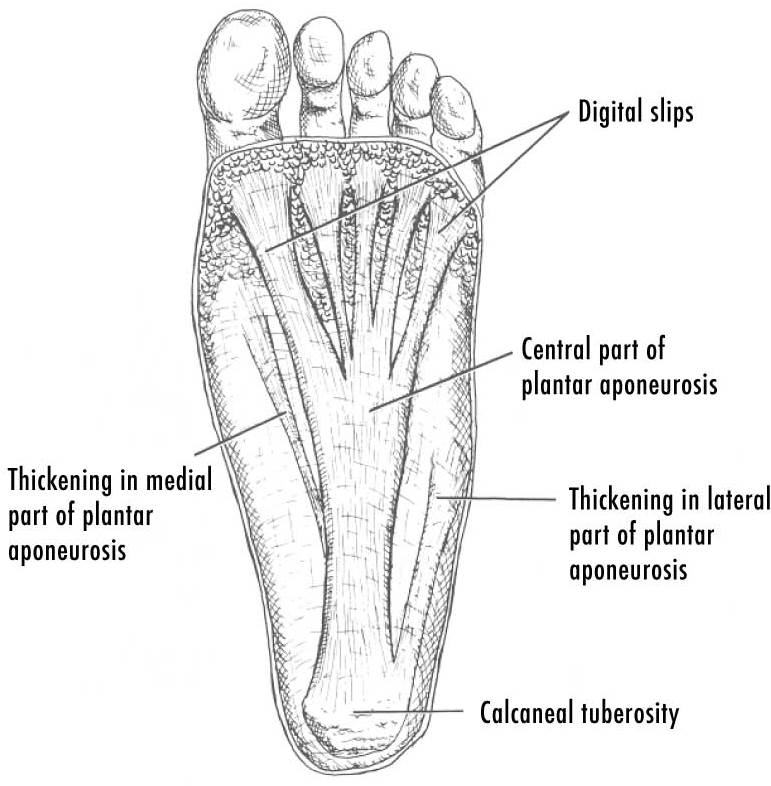
Along the bottom of your foot runs a thick band of connective tissue called the plantar fascia. It stretches from the heel bone to the base of the toes, and it works like a spring: it stores energy when you load the foot and releases it when you push off.
When that tissue is asked to handle more than it is currently built for, it becomes irritated where it attaches to the heel. That irritation is what you feel.
It is common. The current clinical practice guideline for heel pain puts plantar fasciitis at roughly 15% of all foot problems in the general population, and it turns up most often in people between 40 and 60, with no difference between men and women.
The name is slightly misleading. "Itis" implies inflammation, and for a long time that is what everyone assumed. Current understanding is that in many cases the tissue is overloaded and degenerative rather than actively inflamed.
The spot that hurts has a name: the medial calcaneal tubercle, on the inside of the heel bone, where the fascia anchors. It takes high stress because it helps hold up the arch of your foot as you push off with every step.
Why the first step in the morning is the worst
This is the symptom that makes people fairly confident of what they have before they see anyone.
While you sleep, your foot settles into a pointed position and the fascia shortens. Standing up puts the whole band on stretch at once, on tissue that has been still for hours. That is the sharp pain.
After a few minutes of walking the tissue accommodates and the pain fades. Then you sit for an hour and it happens again, usually less severely. It is often called start-up pain, and it is one of the clearest signs of what we are dealing with.
What causes plantar fasciitis?
Rarely one thing. It is usually a change in load meeting a foot that was not ready for it.
The guideline describes it as a gradual onset tied to a change in weight-bearing activity, and notes it is more common in runners, and in jobs that involve a lot of standing. It affects athletic and non-athletic people alike.
The factors most often associated with it:
Which of these applies to you is the useful question, and it is the one an assessment answers.
Heel spurs are not the same thing
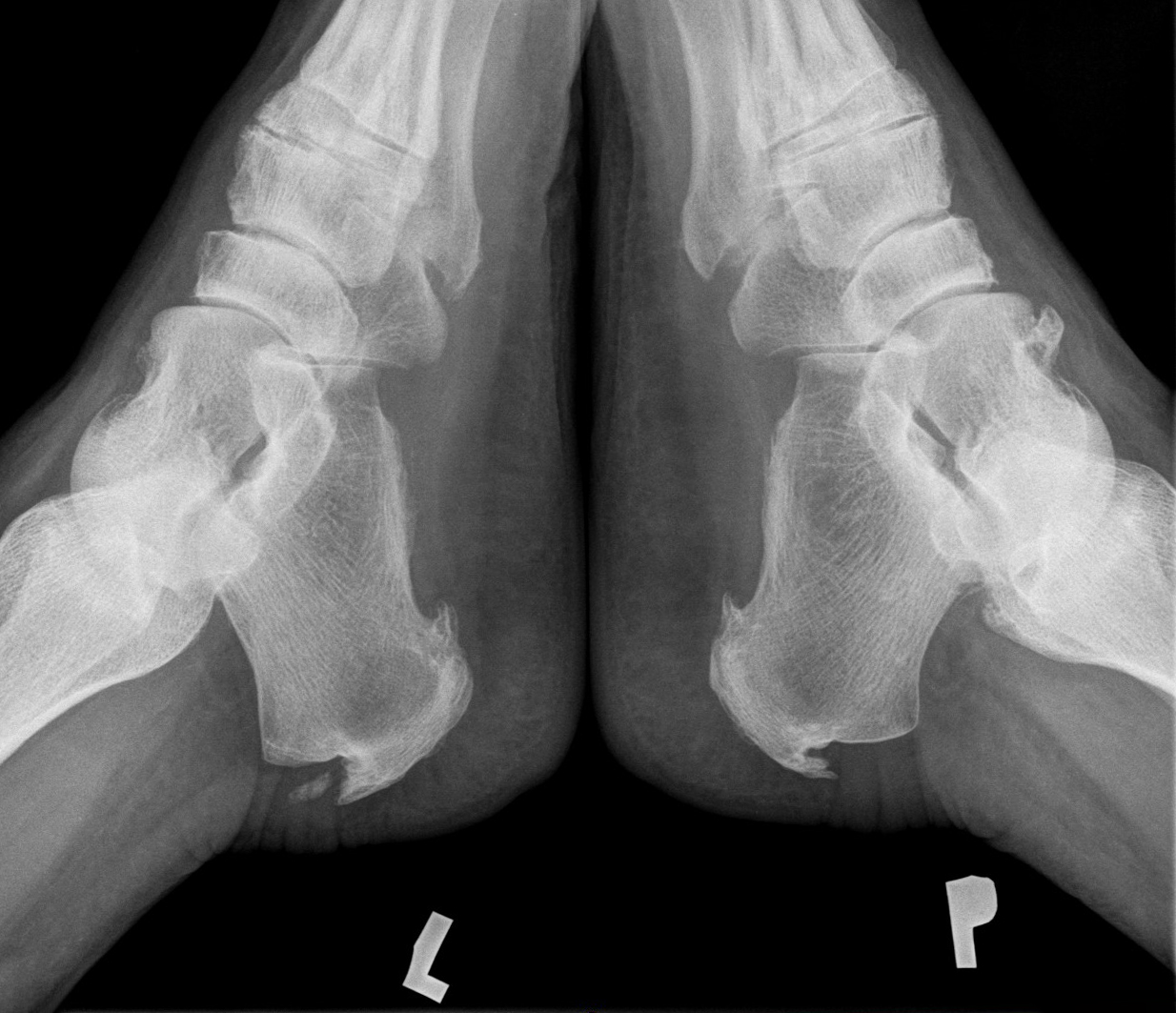
Many people get an X-ray, see a bony spur on the heel, and conclude that is the problem. In Quebec it is often called an épine de Lenoir.
Spurs are common, and plenty of people who have one have no pain at all. We wrote a separate article on heel spurs for exactly that X-ray moment. Plenty of people with heel pain have no spur. The spur is generally understood as a response to long-term load on the heel rather than the cause of the pain.
And a spur is not the only alternative. "Plantar heel pain" is an umbrella term, and the guideline lists heel fat pad syndrome, nerve irritation and a calcaneal stress fracture among the other things that produce pain in the same place. Telling them apart is a job for an assessment, not a search engine.
| What people describe | Plantar fasciitis | Heel spur | Achilles tendinopathy |
|---|---|---|---|
| Where it hurts | Under the heel, sometimes along the arch | Under the heel, in the same place | Behind the heel, up into the tendon |
| When it is worst | First steps in the morning, and after sitting | Often no pain at all | Starting to move, and after activity |
| What it feels like | Sharp, then easing as you walk | Nothing distinct of its own | Stiff and thick, sometimes tender to pinch |
| Commonly confused with | A heel spur seen on an X-ray | The fascia irritation underneath it | Heel pain generally |
Does it settle on its own?
Sometimes, and that is genuinely true. Some cases quiet down when whatever changed goes back to normal.
The difficulty is that most people change how they walk to avoid the pain while they wait. That altered pattern is what can bring the knee, hip and lower back into it. We see people whose foot pain has settled and whose hip has been sore ever since.
We will not put a number of weeks on your recovery. It depends on how long it has been going on, what is driving it, and what you need to get back to.
What happens at an assessment
The point of the first visit is to work out what is loading the tissue in your particular foot, because that is what decides everything after it. Here is what we look at.
You leave knowing what we found and what the plan is.
What treatment here involves
Once the assessment has found the true cause of your pain, your physiotherapist builds an individualized plan of care around three phases of recovery.
Our published approach to ankle and foot pain is multidisciplinary, and the elements we use are:
- Manual therapy and soft tissue mobilization. Hands-on techniques to reduce tension and pain.
- Exercise-based rehabilitation and kinesiology. Restoring function, balance and flexibility.
- Shockwave therapy. Available at the clinic, and recommended for musculoskeletal conditions that have been present for more than 3 months.
- Personalised rehabilitation programmes, built around your foot and what you need to get back to.
Our therapists are members of the Ordre professionnel de la physiothérapie du Québec, and we bill directly to CNESST, SAAQ, SSQ, Desjardins and most private insurers.
When to get it looked at
Book an assessment if the pain has lasted more than a few weeks, if it is changing how you walk, if it wakes you at night, if there is numbness or tingling, or if it followed a specific injury rather than building up gradually.
One number is worth knowing before you decide to wait. People who come in for plantar fasciitis have usually had symptoms for more than a year by the time they seek treatment. It is an easy thing to put up with, which is exactly why it so often gets left.
Common questions
Do I need an X-ray or a scan?
Should I stop walking or running?
Do I need orthotics?
Do I need a referral?
Does it come back?
Getting started
Foot pain is easy to put up with for months, and most people do, right up until it changes what they are willing to do. The sooner it is looked at, the less there is to undo.
Our clinic is on Chemin de la Côte-des-Neiges, we work in English and French, and you can book an appointment online at a time that suits you. If you have questions first, reach out and we will get back to you.
Source
Figures and clinical descriptions in this article come from the current clinical practice guideline: Koc TA Jr, Bise CG, Neville C, Carreira D, Martin RL, McDonough CM. Heel Pain, Plantar Fasciitis: Revision 2023. Journal of Orthopaedic & Sports Physical Therapy 2023;53(12):CPG1-CPG39.